
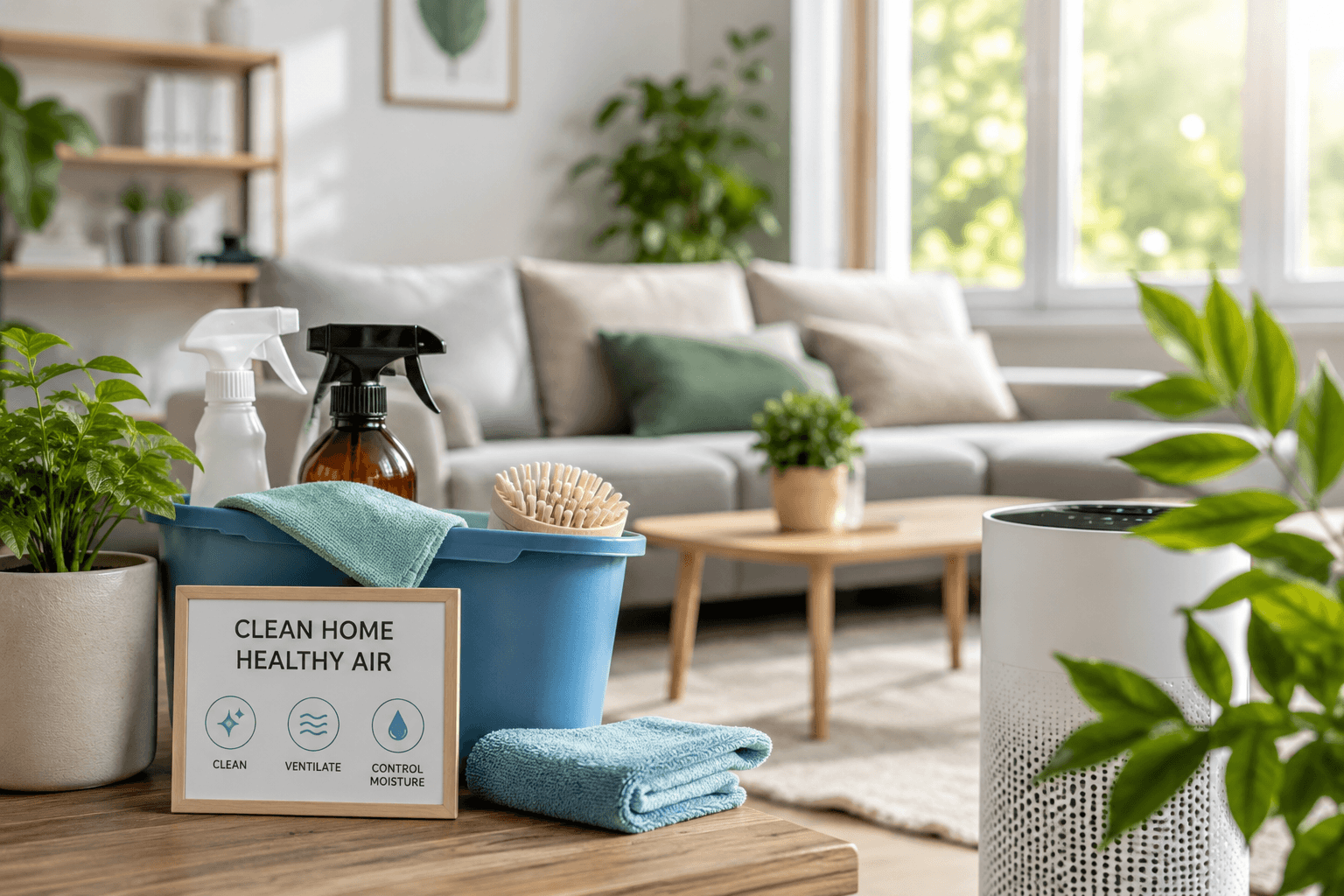
Keeping a home or workplace clean can often feel like a never-ending task. Dust appears on surfaces soon after cleaning, certain rooms seem to become untidy faster than others, and some areas require more attention despite regular maintenance.
The reason is that cleaning is not just about removing visible dirt. It is also about understanding how dust moves, how humidity affects indoor environments, and how airflow influences where particles settle. By understanding the science behind these factors, it becomes easier to create smarter cleaning routines that save time while improving indoor air quality.
Rather than cleaning more often, the key is cleaning more effectively.
Understanding Where Dust Comes From
Dust is a mixture of many different particles, including skin cells, fabric fibres, pollen, outdoor pollutants, pet hair, and tiny particles carried in from outside. Because these particles are constantly being introduced into indoor spaces, completely eliminating dust is impossible.
However, the amount of dust that collects in a room depends on several factors. Areas with high foot traffic, soft furnishings, open windows, or poor ventilation often experience faster dust accumulation.
For example, bedrooms may collect dust from bedding, clothing fibres, and natural skin shedding, while living rooms may gather more particles from carpets, upholstery, and frequent activity. Kitchens can experience a different type of buildup, with airborne cooking particles combining with dust and creating residue on nearby surfaces.
Understanding these sources helps create more targeted cleaning strategies rather than relying on the same approach for every room.
Improving Air Quality Through Better Dust Management
Indoor air quality has a direct impact on comfort and wellbeing. When dust levels increase, airborne particles can affect the freshness of a room and may contribute to issues for people who are sensitive to allergens.
One of the most effective ways to improve indoor air quality is to reduce the amount of dust circulating through the environment. This does not necessarily mean cleaning constantly—it means preventing dust from building up and spreading.
Simple measures can make a noticeable difference, including:
- Using suitable air filters and replacing them regularly.
- Vacuuming carpets and upholstery to remove trapped particles.
- Cleaning high-touch surfaces where dust settles.
- Removing outdoor dirt at entry points with mats and regular floor cleaning.
- Keeping clutter to a minimum to reduce areas where dust can collect.
By controlling dust at its source, cleaning becomes more efficient and indoor spaces remain fresher for longer.
Managing Humidity For A Cleaner Environment
Humidity plays an important role in how clean and comfortable an indoor space feels. Excess moisture can create conditions where mould and mildew are more likely to develop, while very dry environments can allow dust particles to remain airborne for longer.
Maintaining balanced humidity levels helps create a healthier indoor environment. Bathrooms, kitchens, and utility areas are particularly affected by moisture because activities such as cooking and showering release water vapour into the air.
Effective humidity management can include:
- Using extractor fans in moisture-prone areas.
- Improving ventilation where possible.
- Repairing leaks quickly.
- Using dehumidifiers in areas with persistent dampness.
- Avoiding excessive indoor moisture from drying clothes indoors without ventilation.
By controlling moisture levels, businesses and homeowners can reduce cleaning challenges and help protect surfaces, furnishings, and air quality.
Understanding The Role Of Airflow
Airflow has a major influence on where dust settles. Air movement carries particles throughout a space before they eventually land on surfaces. This is why some areas of a room may collect more dust than others, even when they appear to receive similar use.
Heating systems, fans, air conditioning units, and ventilation systems all affect air movement. Poor airflow can allow dust to accumulate in corners, behind furniture, or around vents.
Improving airflow does not mean creating stronger air movement everywhere. In some cases, excessive airflow can simply move dust from one area to another.
A balanced approach is more effective. Keeping ventilation systems clean, ensuring air filters are maintained, and arranging furniture to avoid blocking airflow can help distribute air more evenly and reduce dust hotspots.
Creating A More Efficient Cleaning Routine
Many people spend time cleaning areas that quickly become dirty again while overlooking the factors causing the buildup. A smarter approach focuses on prevention as well as removal.
For example, cleaning high-dust areas more frequently while reducing effort in lower-risk areas can save valuable time. Using the right tools also improves efficiency. Microfibre cloths, quality vacuum cleaners with suitable filtration, and targeted cleaning products can capture more particles instead of simply moving them around.
It is also useful to consider the order of cleaning tasks. Starting with higher surfaces and working downwards allows dust to be collected rather than resettled on already-cleaned areas.
Small changes in technique can make cleaning routines faster and more effective.
The Benefits Of A Science-Based Cleaning Approach
Understanding dust, humidity, and airflow changes the way we think about cleaning. Instead of treating dirt as a problem that appears randomly, we can identify the environmental factors that encourage it.
A science-based approach offers several benefits:
- Less time spent cleaning unnecessarily.
- Improved indoor air quality.
- Reduced dust and allergen buildup.
- Better protection for furniture and equipment.
- A more comfortable living or working environment.
For businesses, these benefits can also contribute to a more welcoming space for employees and visitors. Cleaner environments can create a more professional impression and support healthier workplaces.
Building Cleaner Spaces For The Future
Effective cleaning is not just about appearance—it is about creating environments that feel comfortable, healthy, and well maintained. By understanding how dust moves, how humidity affects indoor conditions, and how airflow influences particle distribution, it becomes easier to develop practical cleaning strategies.
The goal is not to spend more time cleaning. It is to make better decisions about where, when, and how cleaning should happen.
Whether managing a busy workplace or maintaining a home, applying simple principles from dust science can lead to cleaner spaces, improved air quality, and more efficient routines. A little knowledge about what happens in the air around us can make a significant difference to the environments we spend our time in.